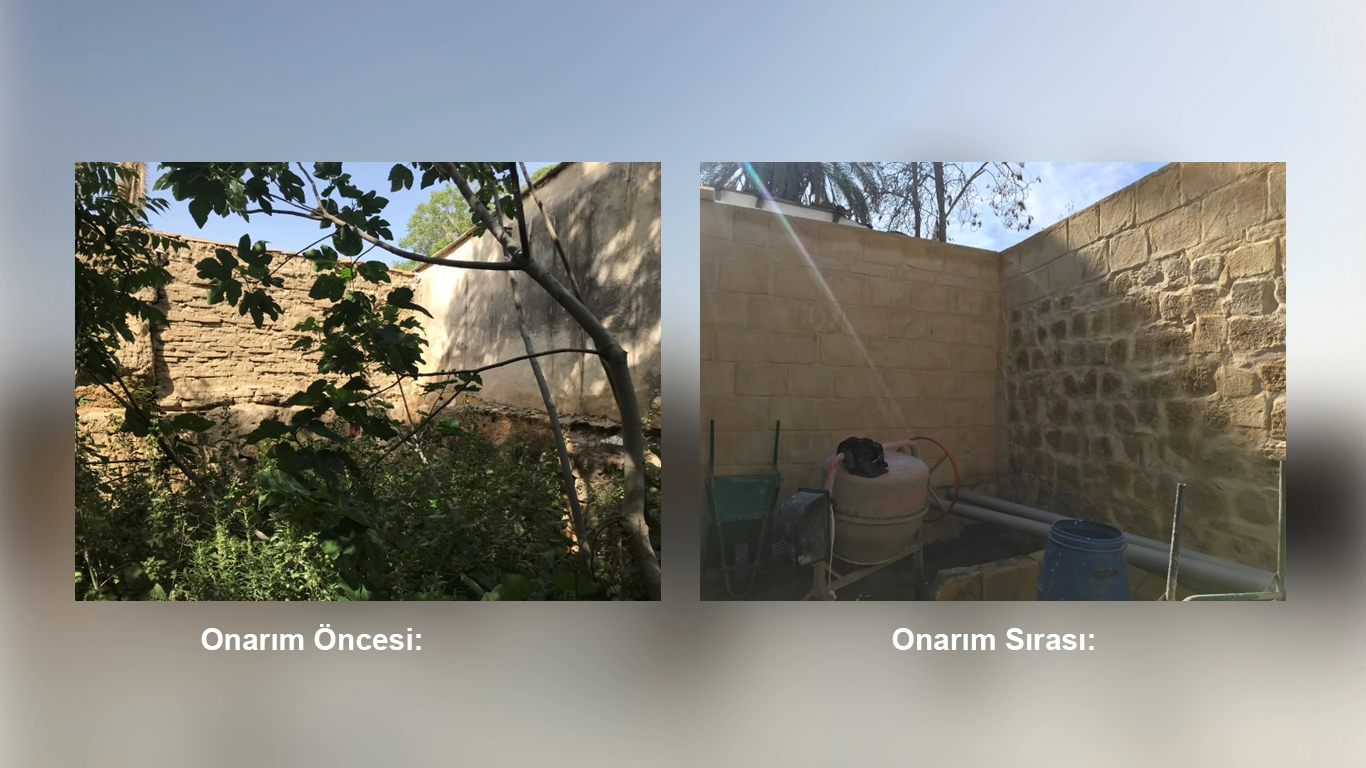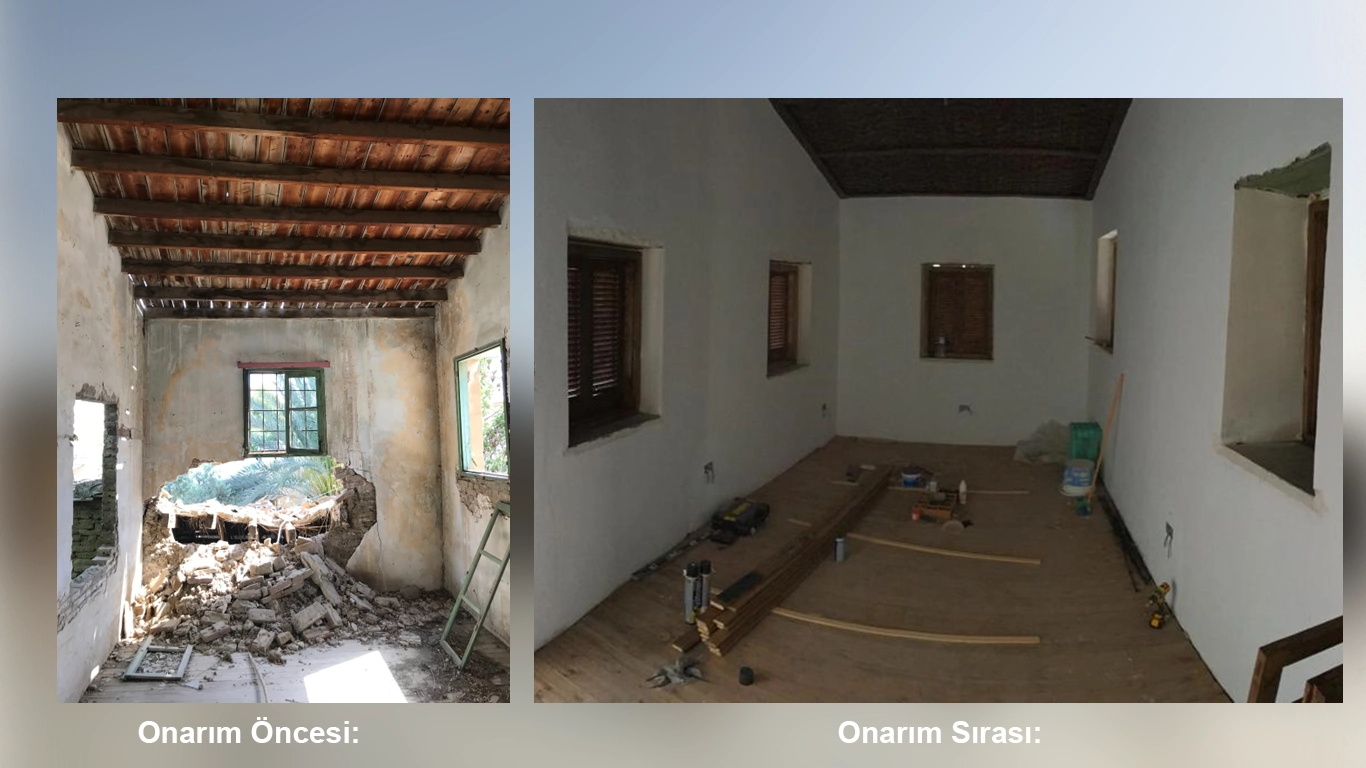


Restoration of the Alparslan Türkeş House in the Turkish Republic of Northern Cyprus (2018)
Restoration of the Birthplace of the Late Alparslan Türkeş, Nicosia, TRNC (2018)
The Life of Alparslan TÜRKEŞ (1917-1997)
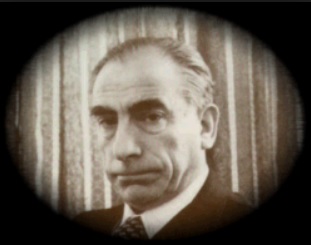
Who was Alparslan Türkeş?
Alparslan was born on November 25, 1917, in Nicosia, at house number 13, Kirlizade Street, Haydarpaşa neighborhood, as Hüseyin Feyzullah, the son of Ahmet Hamdi Bey and Fatma Zehra Hanım from the Koyunoğlu family of Tuzla. He moved to Istanbul with his family from Nicosia on June 3, 1933.
Beginning of his military career
Alparslan Türkeş enrolled in Kuleli Military High School in 1933. He graduated from Kuleli Military High School in 1936 and from the War Academy in 1938. In 1939, he entered the shooting school as an infantry second lieutenant and graduated with the rank of lieutenant. He married Muzaffer, the daughter of Refik Yurtsever’s sister, in 1940. During this time, he was assigned to the 5th Company Command of the 58th Infantry Regiment in Gallipoli and served in Balıkesir, Bandırma, Edincik, Erdek, and Marmara Island. In 1944, while holding the rank of first lieutenant, he was tried along with Nihal Atsız in the “Racism-Turanism” case and spent 9 months and 10 days in Tophane Military Prison. He was released in 1945 by a decision of the Military Court of Appeals and returned to the army in 1947. In 1955, he graduated from the American War Academy and the Infantry School in the USA. Between 1955 and 1957, he served in the Turkish General Staff delegation to the NATO Permanent Committee in Washington. During this time, he received training in international economics. In 1959, he trained at the Atomic and Nuclear School in Germany, then was promoted to colonel and appointed as the Head of the NATO Branch of the Land Forces Command.
The Republican Peasant Nation Party Era
On May 2, 1963, Türkeş founded the Turkey Peace and Progress Association to unite nationalist circles. He contacted Talat Aydemir and Fethi Gürcan, who were preparing a coup. However, he disagreed with Talat Aydemir. Consequently, he informed the government about the coup. He himself was tried for the coup attempt, but acquitted because he had informed the government. During his exile, Alparslan Türkeş frequently met with many of the “14” (members of the National Security Council) to determine his strategy after his return. Indeed, on March 31, 1965, along with former members of the National Security Council such as Dündar Taşer, Ahmet Er, Muzaffer Özdağ, Rıfat Baykal, and Mustafa Kaplan, he joined the Republican Peasant Nation Party (CKMP), effectively entering political life. He became the party’s chairman in 1965, and the party’s charter included the Nine Lights Doctrine. During this period, Türkeş was declared “Başbuğ” (Leader) by his followers and was elected as a Member of Parliament from Ankara that same year. On February 6-8, 1969, the CKMP changed its name to the Nationalist Movement Party (MHP) and its emblem to the three crescent moons.
Family and Death
Türkeş’s first marriage was to Muzaffer Hanım in 1940. Their children were: Ayzit, Umay, Selcen, Sevenbige (Çağrı), and Yıldırım Tuğrul.
Türkeş’s second marriage was to Seval Hanım in 1976. Their children were: Ayyüce and Ahmet Kutalmış.
Alparslan Türkeş passed away in Ankara on April 4, 1997, due to a heart attack. His grave is located in Beştepe, Ankara.
The Purpose of Restoring the House Where the Late Alparslan Türkeş Was Born
The aim is to restore the house in Nicosia, the capital of the Turkish Republic of Northern Cyprus (TRNC), where the late Alparslan Türkeş, a prominent figure in Turkish politics, was born and spent part of his childhood, and to establish a museum with his personal belongings.
The House’s Architecture
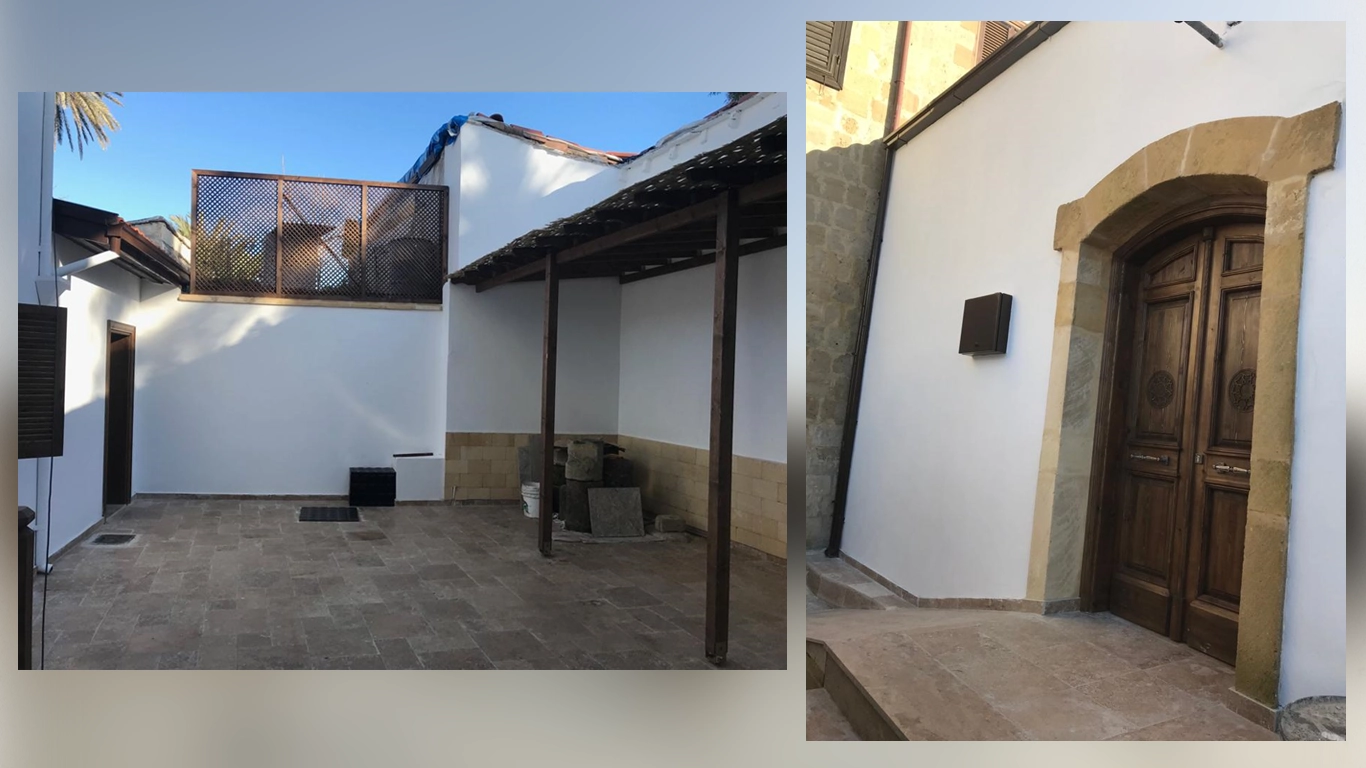
Entry to the area where the house is located is through a stone-framed, low-arched wooden door into the first part of a two-courtyard area. The courtyard is surrounded by single-story structures. Except for the Lusignan Museum, the others are in a derelict state. There are no outbuildings in either courtyard.
The house is a two-story, L-shaped, masonry structure. A corridor on the ground floor provides access to the second courtyard. The ground floor has 90 cm rubble stone walls, while the upper floor, which has undergone alterations over time, is constructed of brick, block, stone, or a mixture of materials. The ground floor and first floor ceilings are wooden ceilings with supporting beams and covered with local wicker underneath. The windows are classic wooden windows with wooden shutters on the outside. The courtyard entrance door is a vertical wooden plank door. The other doors are five-panel solid wood. The ground floor flooring is Cypriot travertine stone.
The ground floor and the first floor are not physically connected.
On the ground floor, besides the corridor connecting the two courtyards, there is a room to the right of the corridor and two interconnected rooms to the left.
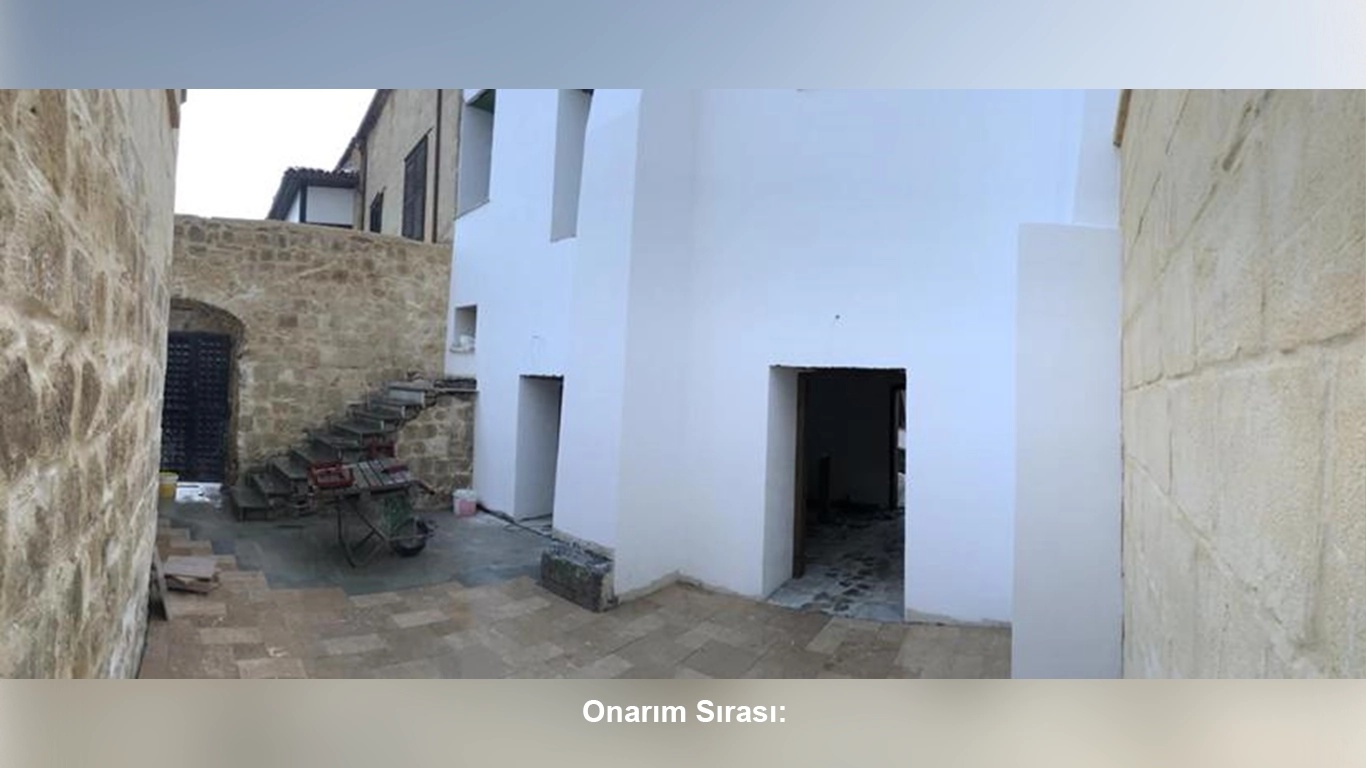
On the first floor, there is a room above the ground floor corridor and a large hall. A wooden staircase leads from the first courtyard to the first floor, and a second wooden staircase leads down to the second courtyard.
Restoration Works
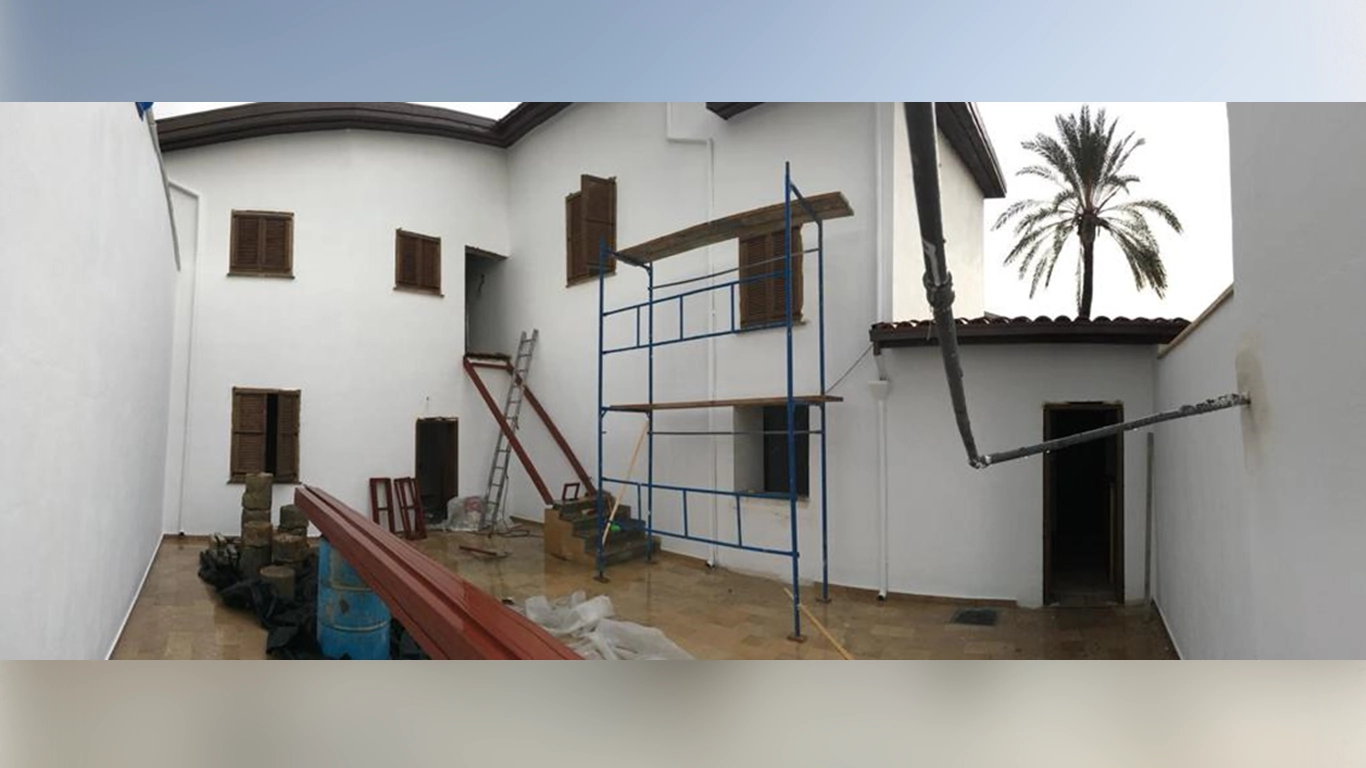
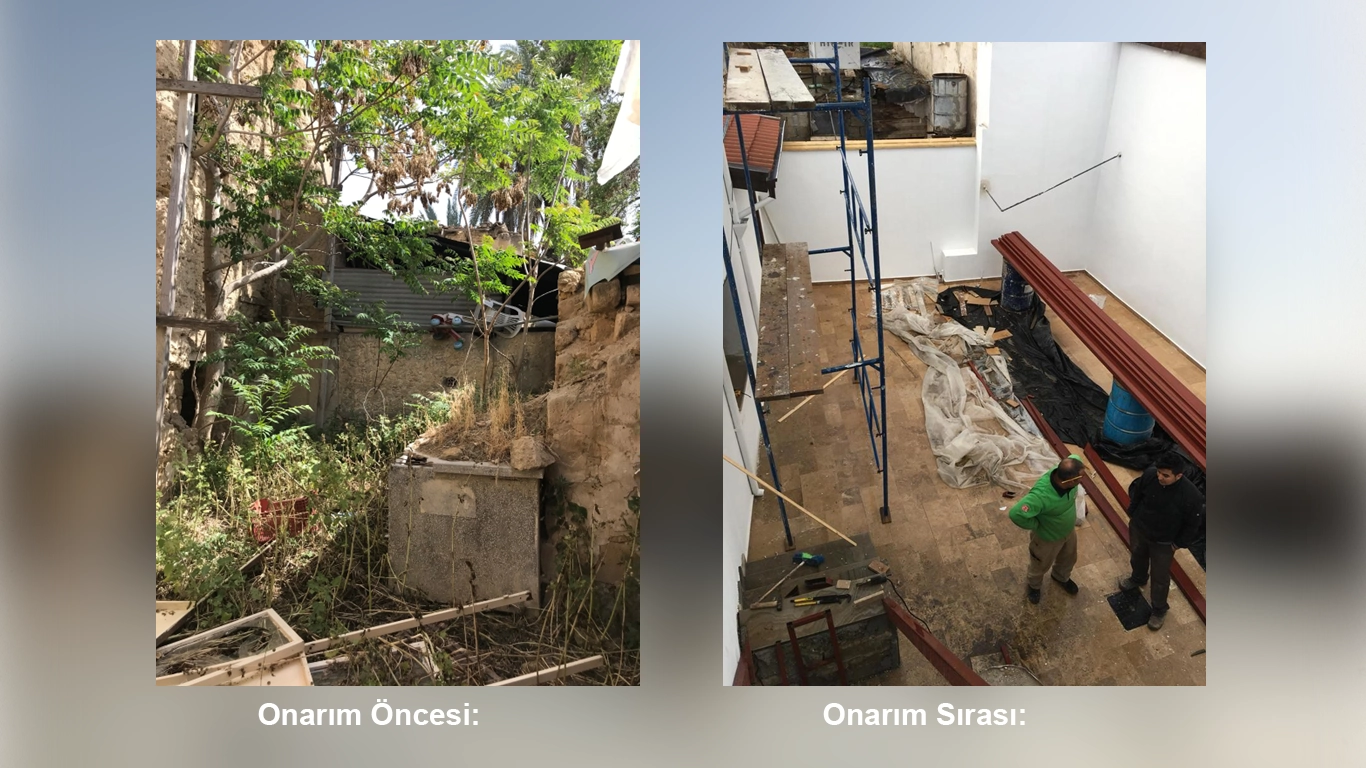
The area where the house is located is surrounded on three sides by derelict structures.
The primary plan is to reinforce the parts of the surrounding structures facing the courtyards to prevent them from posing a danger to the house.
The aim is to restore the house by strengthening its structural integrity and, after the repairs, transform it into a museum displaying Alparslan Türkeş’s personal belongings.
The existing house is two-story, and there is no physical connection between the lower and upper floors. In the second courtyard, it is observed that a part of the house has collapsed, and traces of the foundation are still present.
Furthermore, a doorway was identified in the room on the second floor facing the ruins. Therefore, an archaeological excavation was planned in this area, and a staircase was constructed to physically connect the second and ground floors based on the discovered traces. The other foundation remains were planned to be converted into a toilet and kitchen, and the projects prepared accordingly were approved for implementation by the TRNC Conservation Board.
Museum Exhibition Arrangement
The house, which was in danger of falling into ruin, was restored in 2018 by the Turkish Cooperation and Coordination Agency (TİKA) under the auspices of the Presidency of the Republic of Turkey. The restored house was officially opened to the public as the “Alparslan Türkeş Museum” in July 2019.
The museum is located in a building reflecting typical 1920s Cypriot civil architecture and aims to offer visitors the following:
It showcases the space where Türkeş spent his childhood, providing a historical perspective on his early years.
The museum displays some of Alparslan Türkeş’s personal belongings and photographs from his lifetime.
It also features important documents from Turkish history and memorabilia related to the independence struggle of the Turkish Cypriot people.
The museum also offers the opportunity to listen to some of the speeches he gave at congresses in his own voice.
The museum serves as a commemoration of the Turkish Cypriot people’s struggle from those difficult years to the present day, and contributes to the historical and cultural promotion of the TRNC.
In addition to Alparslan Türkeş’s political identity, the museum also reveals his origins as a Turkish Cypriot and his contributions to the Cyprus struggle.