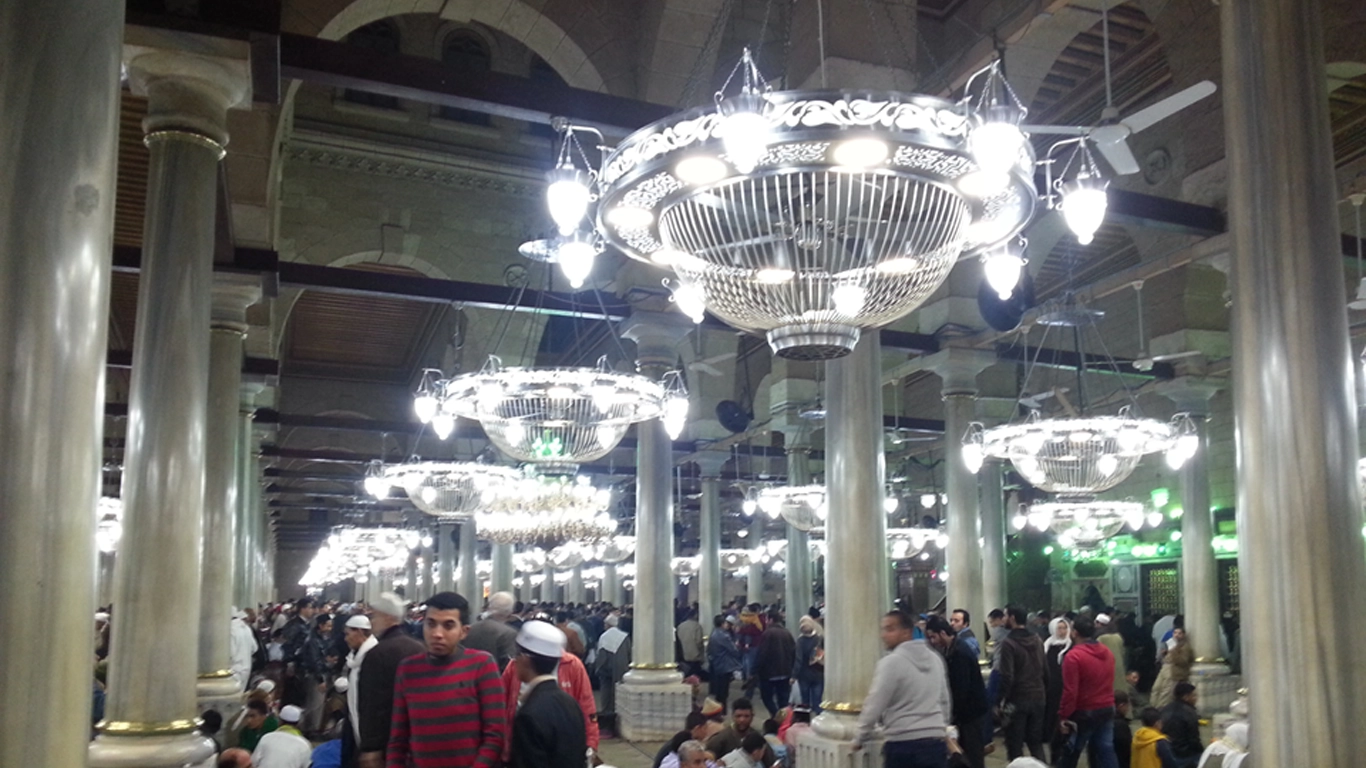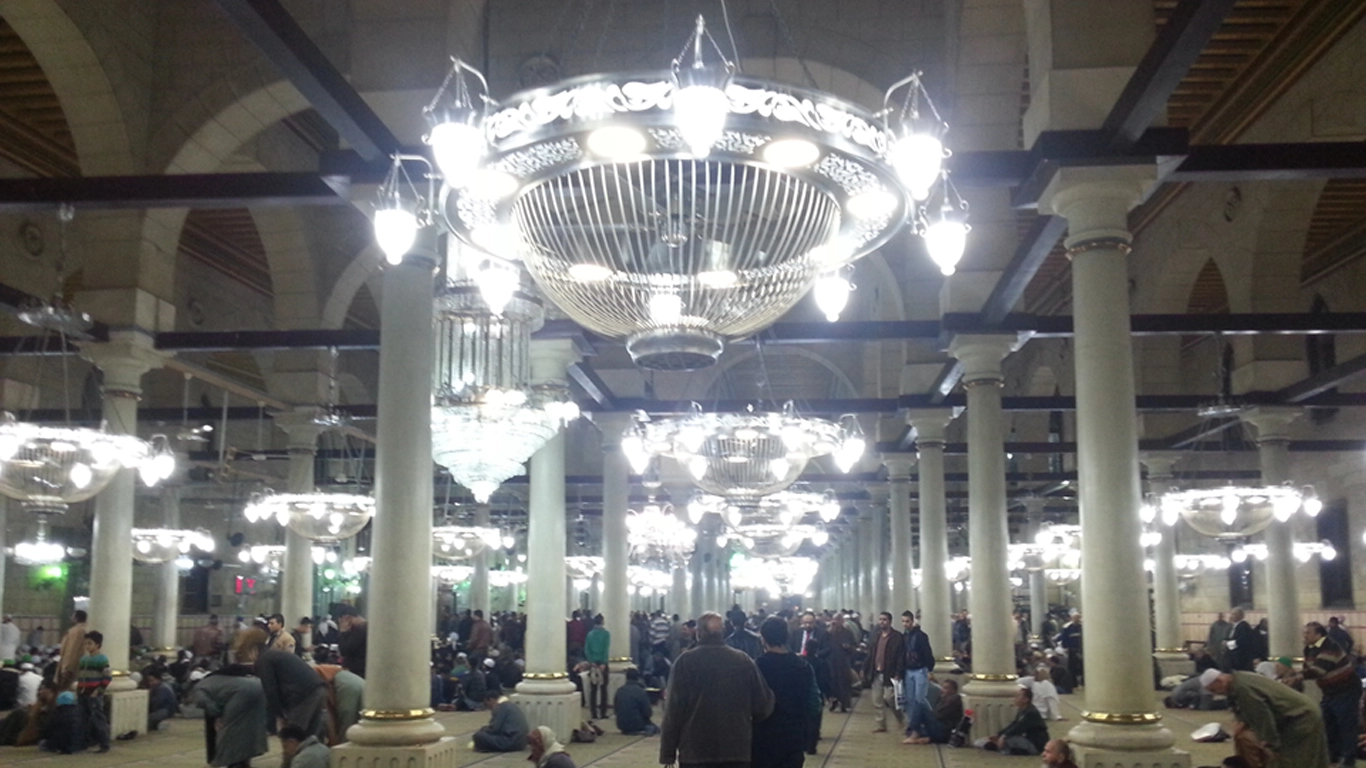


Renovation of the Chandelier at the Imam Hussein Mosque in Cairo, Egypt (2013)
Renovation of the Chandeliers of the Imam Hussein Mosque in Cairo, Egypt (2013)
General Introduction
The Imam Hussein Mosque is located in the Historic Cairo district of Cairo, near Salahaddin Eyyubi Avenue. It is known as an important holy site for Shia Muslims in Egypt. The mosque is said to be the place where a part of the skull (beard or bones) of Imam Hussein, the grandson of Prophet Muhammad, is kept.
The mosque attracts significant attention, especially during Muslim pilgrimages and religious ceremonies.
Historical Background
The Imam Hussein Mosque, also known as the Al-Hussein Mosque, is an important Islamic site located in Cairo, Egypt.
The mosque was built in 1154 by the Fatimid Caliph Zafir at the site believed to be where the head of Imam Hussein, the grandson of Prophet Muhammad, is buried. Imam Hussein was martyred in 680 in Karbala, Iraq, by beheading, and his head was kept by his sister, Hazrat Hussein. It was brought to Egypt by Zeynep. It is believed that the head is buried in the tomb located where the mosque currently stands. The mosque has become prominent both as a religious center and as a part of Cairo’s social and cultural life.
Architectural Features
The Imam Hussein Mosque was built in accordance with classical Egyptian mosque architecture, with a courtyard + prayer area + minaret layout.
The original minaret of the structure is adorned with elegant decorations in the Fatimid period style.
The interior features myrtle woodwork, tiles, and Fatimid inscriptions.
The tomb of Imam Hussein is located within the mosque, reserved as a special section for visitors.
Restoration and Interventions
The mosque has undergone numerous repairs throughout its history. It has been subjected to various renovations and expansions during the periods of different Islamic dynasties, including the Ayyubids, Mamluks, and Ottomans.
One of the most notable expansions occurred during the reign of Mamluk Sultan Nasir Muhammad, who added various structures to the mosque, including minarets and a dome. The structure was expanded and ornamented.
During the Ottoman period, the mosque was renovated and restored several times, with new features added, including the grand entrance gate known as Bab el-Baqi, considered one of the most beautiful gates in Egypt. The minaret and courtyard were also redesigned.
In the 19th and 21st centuries, it was restored by the Egyptian Antiquities Organization.
The Turkish Cooperation and Coordination Agency (TİKA) renovated the mosque’s chandeliers and electrical installations as part of a project. The chandeliers, manufactured in Turkey, were in accordance with the project approved by the Egyptian Ministry of Culture. The renovation of the facade lighting and chandeliers was completed in 2013.
Before / After