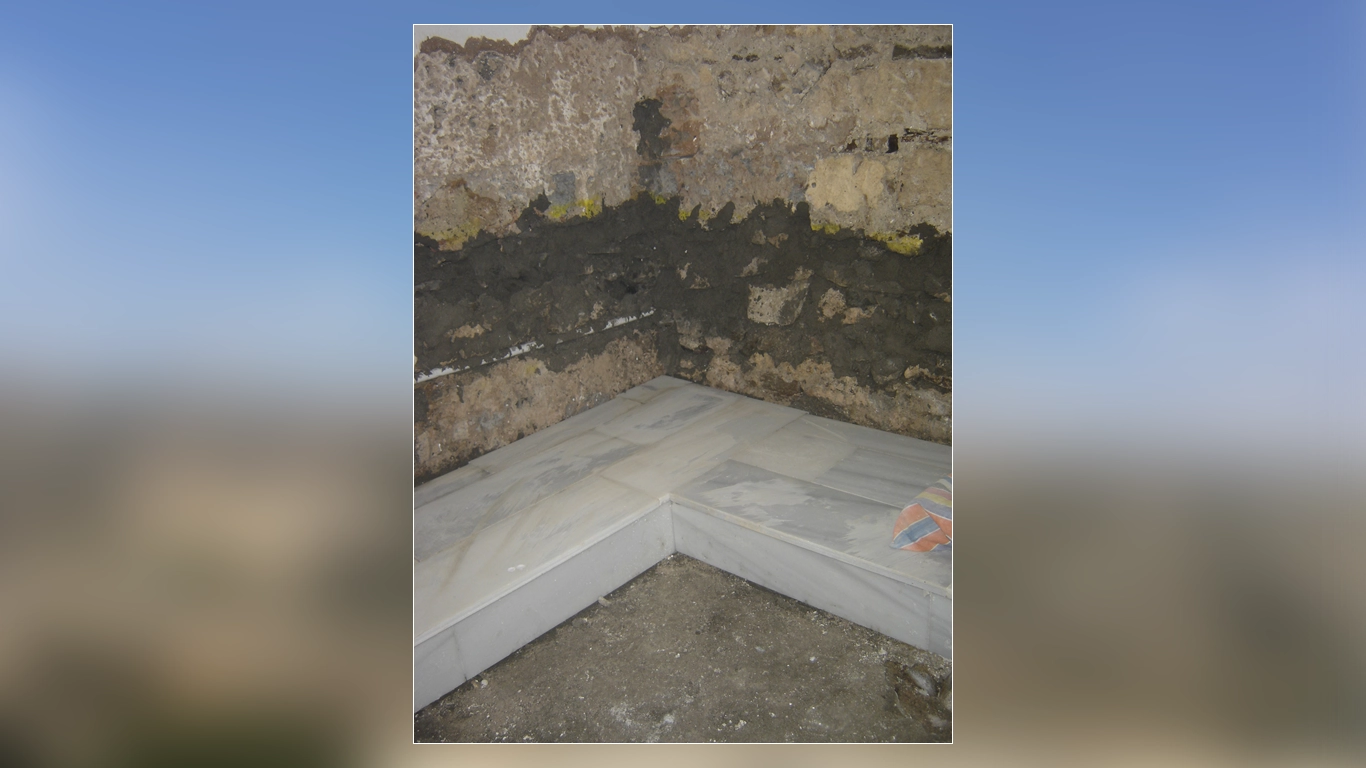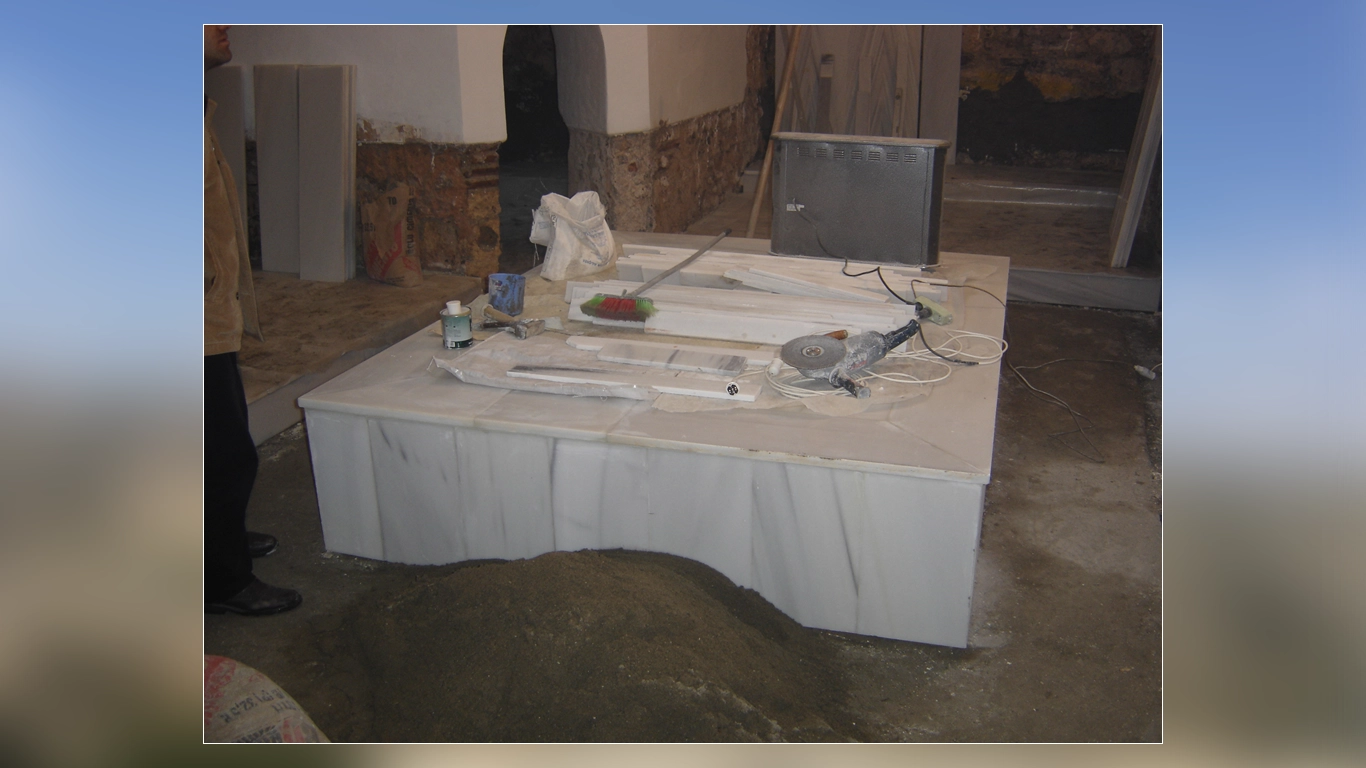


Restoration of Gazi Süleymanpaşa Bathhouse in Göynük, Bolu (2005)
Restoration of the Gazi Süleymanpaşa Bathhouse in Göynük, Bolu (2005)
The Gazi Süleymanpaşa Bathhouse, located in the Göynük district of Bolu, is an important cultural heritage site dating back to the Ottoman period. According to foundation records, the bathhouse was built between 1331 and 1335 by Gazi Süleyman Pasha, along with a mosque built during the same period. It is considered one of the oldest and largest bathhouse structures in Göynük.
Architectural Features
Materials and Building Plan
The bathhouse is constructed with travertine cut stone — a feature that has resulted in a solid and long-lasting structure.
The structure has a double bathhouse plan (men’s and women’s sections).
Interior Layout
The interior of the bathhouse consists of three main sections, in accordance with the traditional Ottoman bathhouse plan:
The cold room is the main entrance section and is covered with a dome. It is connected to the upper sections by squinches with niches between them.
The square space that follows the transition from the lukewarm to the cold section is surrounded on both sides by iwans (vaulted halls).
The hot section is the main bathing area of the hammam. The main square-plan room consists of three iwans and three corner cells. The central space and corner cells are covered with domes, while the iwans are covered with barrel vaults.
Women’s Section
The women’s section is roughly similar in plan to the men’s section, except for a few differences in measurements and details.
The women’s section shares similar characteristics with the men’s section, except for a few differences in details and dimensions.
Roof and Exterior Features
The roof covering is traditionally covered with corrugated tiles.
Repairs and Restoration Works
Restoration Process
After being closed for many years, the hammam underwent extensive restoration work.
In 2005, the General Directorate of Foundations, Ankara Regional Directorate of Foundations, carried out a comprehensive restoration.
In 2013, as a result of ongoing maintenance and repair work on the building, it was restored again according to modern conservation standards.
The reopening ceremony of the restored bathhouse was held in the spring of 2025 (May-June 2025).
Restoration Details
The interior of the bathhouse was renovated with the support of a benefactor; the roof and covering repairs were carried out under the supervision of the Ankara Regional Directorate of Foundations.
During the repair work, particular attention was paid to preserving the original architectural texture of the building.
Contribution to Tourism and Culture
With the restoration, the bathhouse not only remained a preserved historical structure but was also brought back into tourism and integrated into socio-cultural life.
General Assessment
The Gazi Süleymanpaşa Bathhouse is one of the best examples of Ottoman-era bathhouse architecture in Turkey.
Architecturally, it follows the classic bathhouse plan with its domed sections, iwans (vaulted halls), and barrel vault systems.
In terms of restoration, original elements such as the stone wall construction and roof covering were preserved, and the bathhouse was kept alive as a cultural heritage.