

Jerusalem Bab al-Rahma Muslim Cemetery Arrangement (2017)
Jerusalem Bab al-Rahma Muslim Cemetery Arrangement (2017)
History and Background
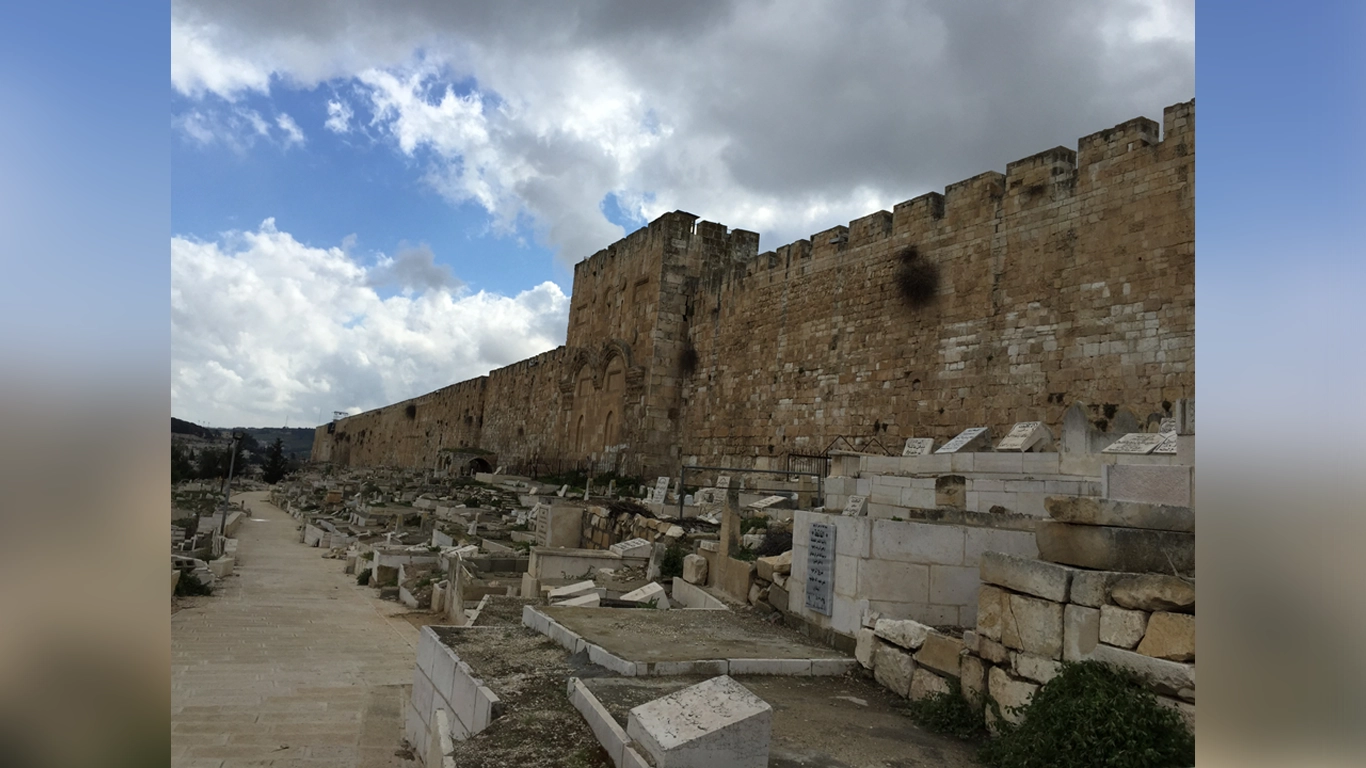
The Bab al-Rahma Muslim cemetery in Jerusalem is a historically and strategically important cemetery located within the city walls of Jerusalem, surrounding the Al-Aqsa Mosque Haram al-Sharif to the east. It is the resting place of prominent Arab and Turkish Muslim figures, most notably the Companions of the Prophet, Shaddad ibn Aws and Ubadah ibn Sammit.
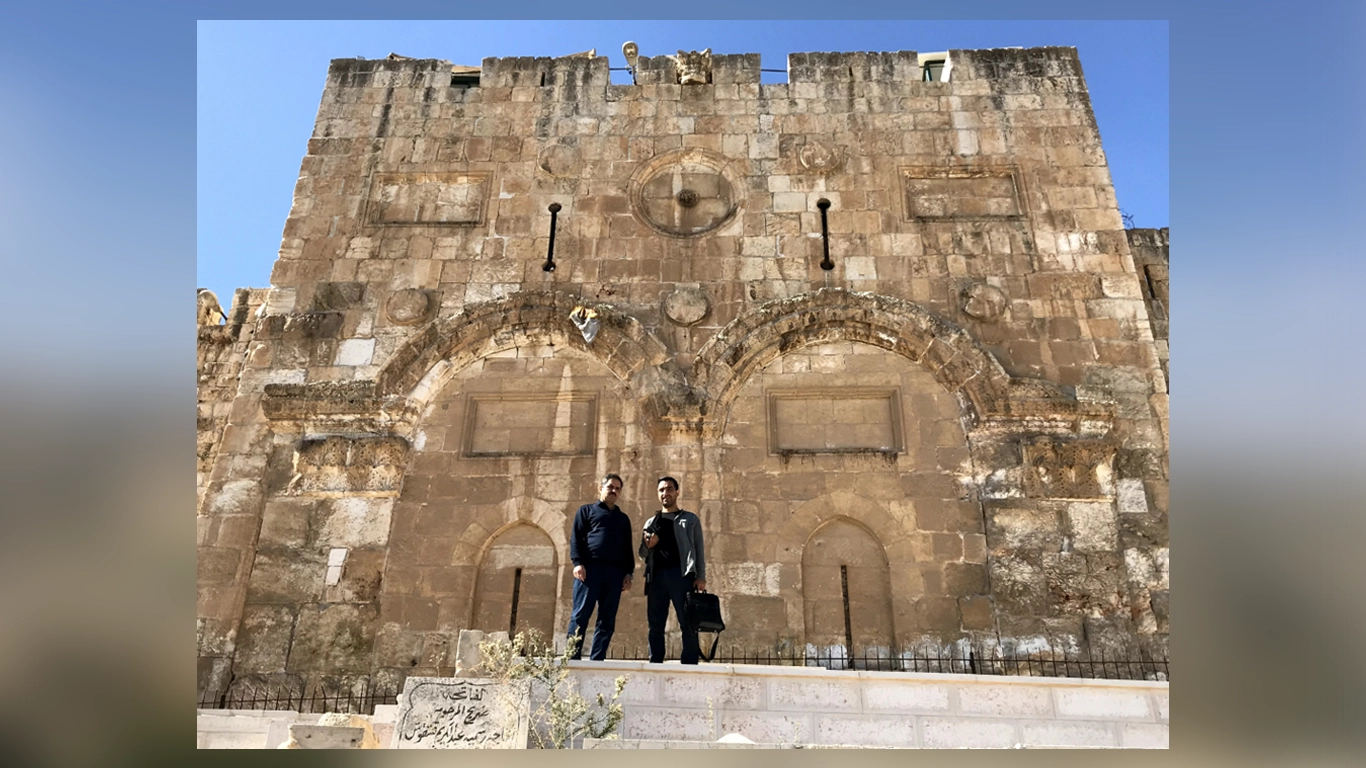
The Bab al-Rahma Cemetery stretches along the eastern wall of the Haram al-Sharif, near the Lion Gate on the city walls, past the Gate of Mercy, which was closed during the time of Caliph Umar. Therefore, the inscription on its gate reads “Gate of Mercy” (Muslim Cemetery).
Above the inscription is the word “Allah” written inside a crescent moon. It is the oldest Muslim cemetery in Jerusalem. Many of the Companions of the Prophet (Sahaba) who settled in the region after the Muslim conquest of Jerusalem are buried here. The most well-known are Shaddad ibn Aws (may Allah be pleased with him) and Ubadah ibn Samit (may Allah be pleased with him).
The tombs on the left, elevated above, upon entering through the Gate of Mercy are primarily those of Ottoman Muslims.
This cemetery has been where Muslims have been buried since 637, the year Caliph Umar conquered Jerusalem.
The opposite hill, Mount of Olives, is the site of the Ottoman Army’s headquarters under the command of Cemal Pasha in Jerusalem, and is now a Jewish cemetery.
Historical Significance
The Bab al-Rahma Cemetery is considered sacred in Islamic history because it contains the graves of:
Individuals believed to be Companions of the Prophet Muhammad,
Mujahideen who died during the conquest,
Muslims who lived in Jerusalem during and after the Ottoman period.
The cemetery has been revered by Muslim communities for centuries as an integral part of Jerusalem’s Islamic heritage.
Modern Period and Developments
Ownership and Protection Debates
The cemetery has been at the center of serious debate in recent years:
Some Palestinian sources claim that the Israeli administration wants to develop certain areas as parks, control parts of the cemetery, or carry out new projects on it. According to these claims, there have been setbacks in the protection of the cemetery, and attempts are being made to restrict the burial rights of Muslims.
Israeli authorities, however, have argued that the work being done in the area is small-scale and that the graves will not be moved. The Israeli side’s statements on this matter may be contradictory.
Practices Regarding Burial and Usage Rights
In 2016, a decision was made to prohibit burials in a section of the cemetery. This decision was made by the Israeli Parks and Nature Authority and the Jerusalem Municipality, and the Jordanian Islamic Endowments Authority stated that this was an attack and an attempt at historical distortion.
Sources indicate that this area contains the remains of Ottoman-era soldiers and historical tombs.
The Cultural and Religious Significance of Bab al-Rahma
This cemetery is not merely a burial place, but also a significant historical and cultural memory site carrying the legacy of Muslims who lived in Jerusalem for centuries.
For many, it is both a sacred place connecting with past generations and a symbol of the struggle for political and cultural identity.