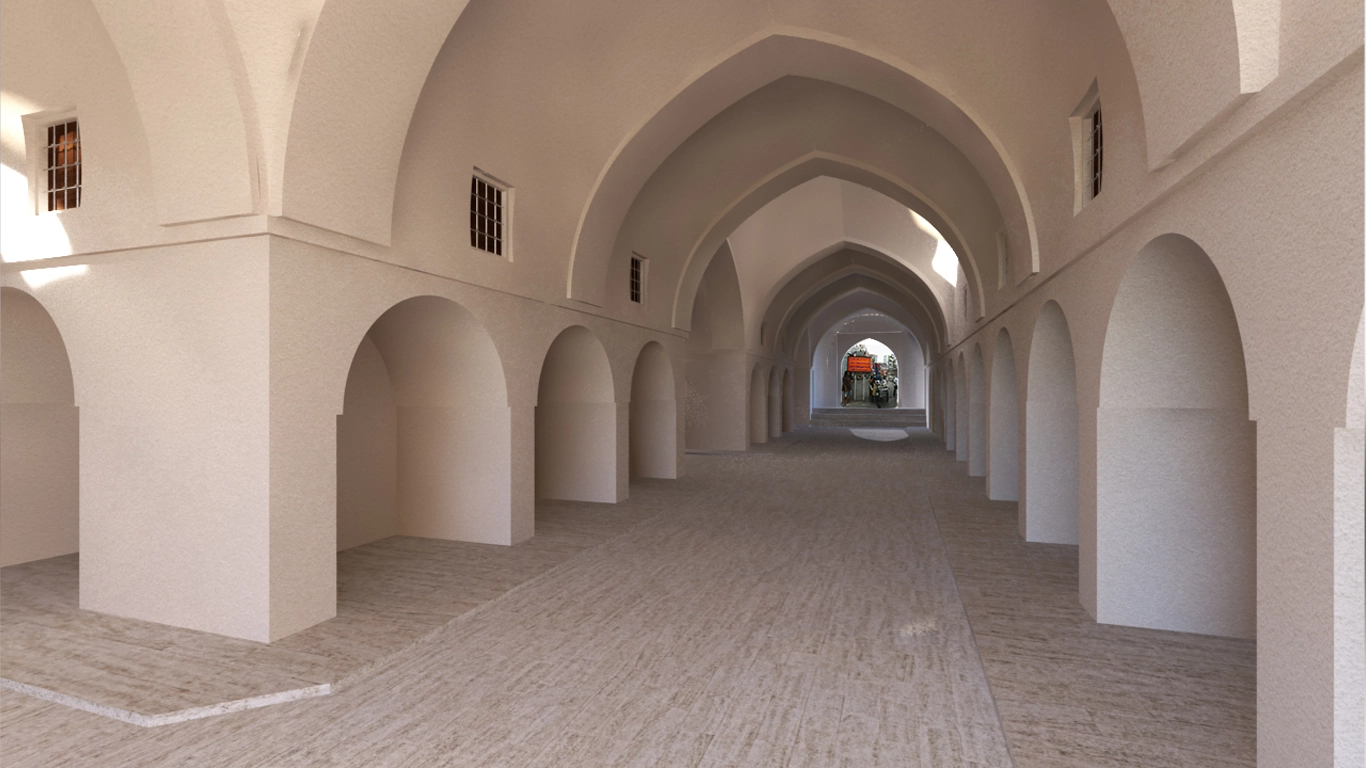


Restoration of Kayseri Bazaar in Kirkuk, Iraq
Restoration of the Kayseri Bazaar in Kirkuk, Iraq (2019)
Kayseri Bazaar — General Introduction
The Kayseri Bazaar is a historical covered market from the Ottoman period located in the city center of Kirkuk, Iraq. For many years, it served as the heart of the city’s commercial life and was one of Kirkuk’s important cultural and economic centers.
The bazaar is also considered a cultural and historical symbol among the Iraqi Turkmen community.
Historical Background and Architecture
Ottoman Period Establishment
The construction of the Kayseri Bazaar took place during the Ottoman period, around 1850–1855.
The structure is called “Kayseri” because it is associated with another Kayseri bazaar model in the Ottoman period or with cultural and commercial ties to Kayseri.
The Kayseri Bazaar is located on the southeast side of the Kirkuk Castle. The bazaar was built during the Ottoman period between 1850-1855. It was once a large market that served as the commercial center of Kirkuk. The name Kayseri comes from a word in Sumerian (Kengerler), an Archaic Turkic dialect, from the word “Ki’sare,” meaning “shopping center.”
The market is a large, covered bazaar. Originally designed as an architectural masterpiece, it consisted of approximately 360-365 shops, representing the days of the year. The ground floor had 12 rooms, formerly used as inns, representing the twelve months of the year. The market had seven entrance gates, representing the days of the week. Within the market were 24 streets, each representing a day or hour.
In the past, Kayseri Market, the largest bazaar in Kirkuk, housed merchants, tailors, coffee houses, daily accommodation providers, and other traders.
In Suphi Saatçi’s book, “Kirkuk Houses,” Evliya Çelebi mentions visiting Kirkuk and noting a small market (Kılcılar) near the castle. However, his travelogue refers to the Kelkit region, and the etymology of the word is Kirkuk (Kirkuk city, Kirkuk plain, etc.).
The Kirkuk Antiquities Department carried out a renovation in the market in 1978. It can be seen that the south facade of the building was renovated using concrete, and a different form of masonry system was used on the building’s facade.
Architectural Features
The market is a covered shopping center, similar to classic Ottoman covered markets. It is a large market structure, and its interior layout conforms to traditional market architecture.
It has an interesting architectural-numerical arrangement:
The presence of 24 streets/alleys within the market symbolizes the hours of the day,
365 shops represent the days of the year,
and 7 entrance gates represent the seven days of the week.
Furthermore, the bazaar was built at the foot of the Kirkuk Citadel, where it is situated, under the “protective influence” of this elevated area.
Such numerical symbols can occasionally be seen in the Ottoman covered bazaar tradition; the plans of the bazaars were conceived to reflect not only commerce but also social order and urban rhythm.
It is said that the area where the market was established was called the “pit neighborhood.” The building material of the pointed, low domes at the main vault intersections is brick, while the rest of the structure is entirely stone. The building stone is incompletely formed limestone. The stone is very porous, and the pores are filled with powdered lime. This stone was also used in the arches and jambs, and window lintels, but due to excessive material loss, it was completely removed in previous repairs and covered with plaster. Plaster decorations are also visible on the window lintels and edges.
The average width of the shop facades is between 1.70 and 2.45 meters. The average depth is between 2.20 and 2.75 meters. The shop ceilings are semi-vaulted. The pediment is rounded. In a very small number of shops, the vault pediment ends with a stone arch and jamb. The average height is between 1.80 and 2.40 meters relative to the apex of the vault. The number of shops that can be counted is 225-250.
The basement shops are covered with pointed arched vaults averaging 4.50 meters wide and 5.00-5.50 meters high. The staircase leading to the inn is located between the shops. The windows of the inn rooms open onto this area. The vault intersections end with a pointed, flattened dome.
The areas used as an inn in the basement are also at the same level as the shops opening to the outside at street level. The exterior shop architecture is the same as the interior shops.
Numerous ventilation shafts measuring 90×90 cm are located between the vaults, opening onto the building’s roof.
The spaces between the vaulted ceilings above the market have been filled in and leveled. It is covered with concrete.
The market burned down on November 25-26, 2018.
Socio-Economic and Cultural Function
Kayseri Bazaar is a trade center that played an important role in the economic life of Kirkuk. In particular, a large portion of the merchants in the area were of Turkmen origin, and the bazaar was the heart of trade for centuries.
The structure was seen not only as a place of commerce but also as a part of the local cultural identity; it was described as the historical heritage and pride of the Turkmen community.
2018 Fire and Damage
Fire Incident
November 26, 2018, Kayseri Bazaar
A major fire broke out in Kayseri, rendering a large part of the bazaar unusable.
Hundreds of shops in the bazaar were damaged in the fire; the artifacts, especially those in the jewelry shops, suffered significant losses.
Restoration and Interventions
Contribution of Turkey and TIKA
Following the incident, upon the instruction of the President of the Republic of Turkey, Recep Tayyip Erdoğan, the Turkish Cooperation and Coordination Agency (TIKA) began work on the restoration of the Kayseri Bazaar.
TIKA immediately started debris removal and cleaning operations after the fire.
As part of the bazaar’s restoration project, the fire, water, and electrical systems were renewed; the interior surfaces, floors, and architectural details were rebuilt, remaining faithful to the original Ottoman texture.
The modernization also included the installation of preventive infrastructure such as fire alarms, security cameras, and burglar alarm systems.
The restoration was completed in 2020, and the bazaar was handed back to the merchants; thus, the structure was brought back into commercial life.
The Importance and Sustainability of Kayseri Bazaar
Historical Value: Kayseri Bazaar is considered a cultural heritage site due to its significant role as an important part of the Ottoman legacy in Iraq.
Ethnic Identity: The bazaar holds importance for the Turkmen communities living in Kirkuk, both economically and culturally.
Urban and Social Fabric: The covered bazaar has functioned for many years not only as a center for commerce but also as a hub for urban social life.
The Kirkuk Kayseri Bazaar is a covered commercial market built during the Ottoman period and holds both economic and historical significance for the city. It was damaged by a major fire in 2018; following instructions from the President, it was restored by TIKA, preserving its original structure. The building holds cultural value for the Turkmen community living in Kirkuk.