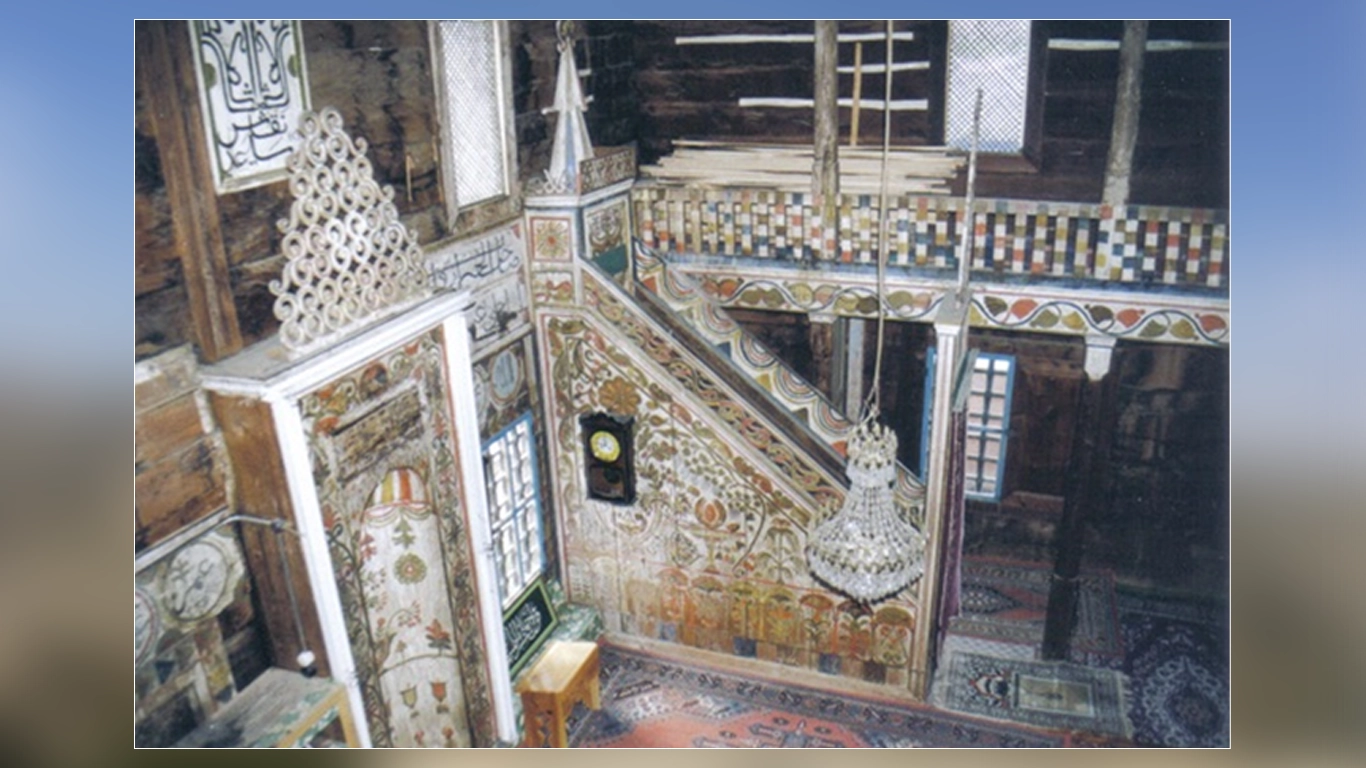


Restoration of Samsun Kavak Bekdemir Village Mosque (2006)
Restoration of Samsun Kavak Bekdemir Village Mosque (2006)
Located in Köyiçi Mevkii, Bekdemir Village, Kavak District, Samsun, the registered building, registered under title deed number 5, block 119, parcel 66, occupies a land area of 423.22 m². Its owner is the “Elhaç Abdurrahman Mosque Foundation”. This historical mosque is one of the rare examples of wooden architecture in Anatolia.
The structure is entirely made of wood and constructed without the use of nails; it is built by directly interlocking wooden planks.
This technique is a unique example of craftsmanship seen in the construction of wooden mosques during the Ottoman period.
Historical Background
It is estimated that the main floor of the building was constructed in 1596, and the upper floor (mahfil) section in 1599. This date is primarily based on research into the construction technique and decorations.
The inscription in the interior decorations, dated 1877, is accepted as the year of the decorations’ creation.
There is also information suggesting that the mosque was originally located in a cemetery near the village, not in its current location, and was later dismantled and moved to its present site.
Architectural Features
Built in 1294 AH (1873 AD), the mosque is a significant landmark in the region. In Samsun province, it ranks second in this respect, after the Göğceli Mosque in Çarşamba. No other example with wooden and interior decorations has yet been found in the region.
Wooden Construction
The mosque is constructed using interlocking oak planks; no nails were used. This construction method is known as the “cantilever technique.” It is surrounded by a portico supported by wooden pillars, constructed from interlocking oak planks. The wide-eaved gable roof is covered with Marseille-type tiles.
Plan and Structure
The mosque is two-story and has a nearly square plan. It is surrounded by porticos on three sides; the north facade has a wider entrance portico.
Ornamentation
The interior is decorated with plant-themed penwork using root dyes, reflecting traditional Anatolian wood carving art.
The mosque’s carved door is adorned with plant motifs. Above the door is a frieze of finger motifs. Further up, in the center of two windows, there is an Arabic inscription within a round medallion.
The interior of the mosque is decorated with various plant motifs made from root dyes.
Courtyard and Surroundings
The mosque’s courtyard features a traditional stone fountain. While a stone fountain previously existed in the courtyard of the registered building, its current fate is unknown. The front of the fountain is arranged in two panels; the left panel features a crescent moon and flower motif in the center, a star motif at the base, and other motifs, as learned from the accounts of the village elders.
Important Features and Stories
The mosque is noteworthy not only for its architectural features but also for the interesting folkloric stories within it. For example, according to the imams, there were once compartments inside the mihrab where bees made honey; this honey was used to contribute to the mosque’s expenses, but only to the imam’s salary.
In 1996, it was stated that some foreign scientists examined the age of the trees in the mosque and concluded that they were approximately 490 years old.
Conservation Status
The mosque was placed under “first-degree protection” by the Samsun Regional Board for the Protection of Cultural and Natural Heritage in 1995. Thanks to this, its architectural, material, and decorative features are preserved.
The Samsun Kavak Bekdemir Village Mosque is a rare and valuable example of Anatolian wooden mosque architecture.
The building is noteworthy both architecturally and socio-culturally due to its nail-free construction, traditional decorations made with root dyes, stone fountain courtyard, and the interesting story of the honey in the mihrab. It is still kept open for worship and visited by the local community.