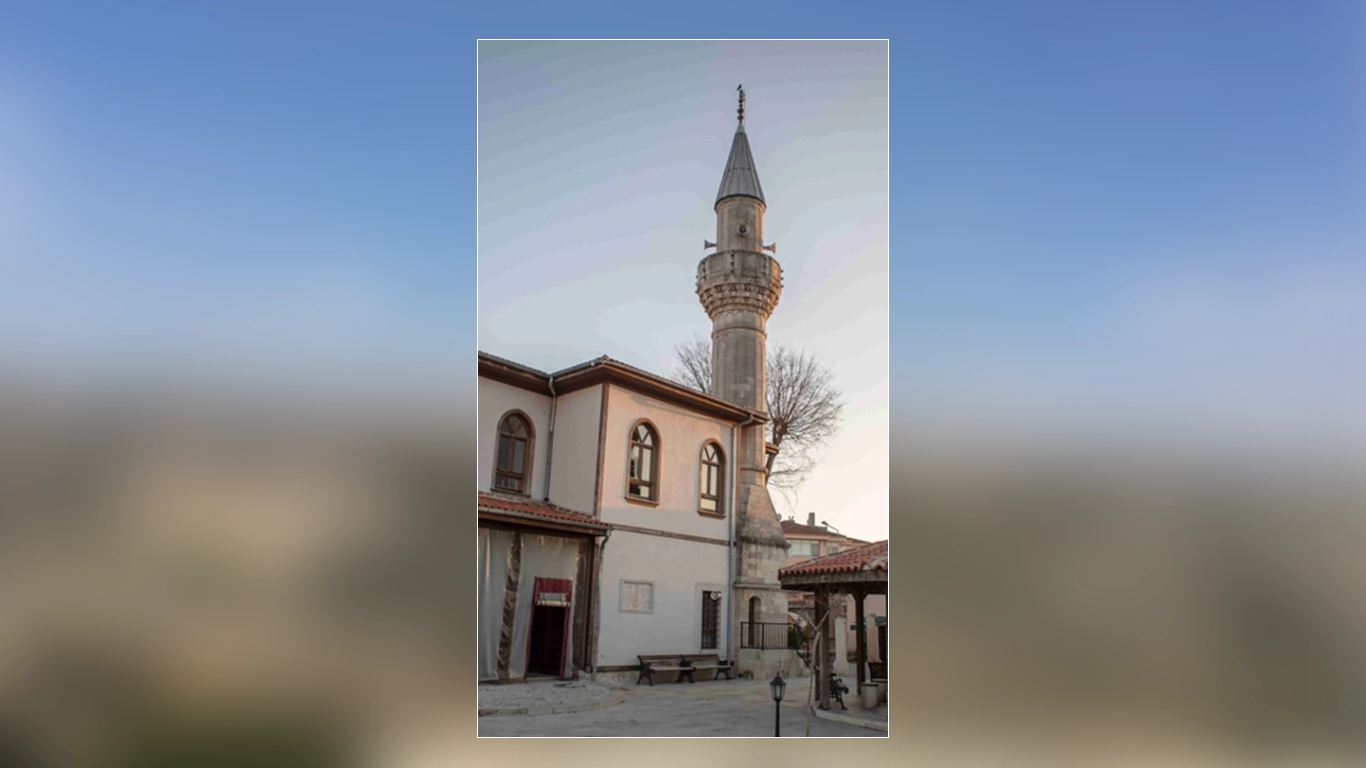


Restoration of the Minaret of Hasan Sezai Mosque in Edirne (1997)
Restoration of the Minaret of Hasan Sezai Mosque in Edirne (1997)
Historical Background
The Hasan Sezai (Mosque) Complex, located in the center of Edirne, is situated on Bostan Pazarı Street in the Talat Paşa neighborhood. Originally built in 1486 by Şah Melek as the Şah Melek Zawiya, it is now part of a complex known by the names Gülşenî, Sezâî, and Hasan Sezâî Tekke. The complex consists of a mosque, two tombs, a fountain, a water well, and a cemetery.
Hasan Sezai, the founder of the Sezaiyye branch of the Halveti-Gülşenî order and a poet, died in Edirne in 1738 and was buried in the cemetery of this tekke that bears his name.
The cemetery of the Hasan Sezai Dervish Lodge is also under the ownership of the General Directorate of Foundations and was registered by the Edirne Cultural and Natural Heritage Protection Board with decision number 7697 dated 04.07.2003.
The complex, which makes significant contributions to religious tourism in Edirne, is one of the places that attracts many tourists today.
Restoration and Construction Works
The lodge, which was on the verge of ruin, was renovated in 1631 by a person named İsa Dede. Later, Sadık Efendi, a descendant of Sheikh Sezai, had it demolished from its foundations and rebuilt it in 1740-41.
The mosque, of which only the foundation remains today, was completely destroyed in the 1953 earthquake. Only the section of its minaret up to the balcony remained standing, and subsequently, the section below the balcony also began to deteriorate. Therefore, in 1997, the General Directorate of Foundations prepared a restoration project based on available data and, following approval from the Edirne Regional Board for the Protection of Cultural Heritage, repaired the minaret.
According to a photograph from 1957 in the archives of the Edirne Regional Directorate of Foundations, the mosque has a rectangular plan oriented south-north, a tiled gable roof, and a single minaret.
1) 1997 Minaret Restoration and Reconstruction
Completely destroyed in the 1953 earthquake, only the section of the minaret up to the balcony remained standing. Subsequently, the remaining section below the balcony began to deteriorate. Therefore, in 1997, the General Directorate of Foundations prepared a restoration project based on existing data and, following approval from the Edirne Regional Board for the Protection of Cultural Heritage, repaired the minaret.
2) 2013–2015 Mosque Reconstruction
In 2013, the Edirne Regional Directorate of Foundations (now the General Directorate of Foundations) initiated reconstruction work on the mosque along with the dervish lodge complex.
The mosque, which was in a state of ruin, was rebuilt from the ground up. During this process, its architectural form was recreated based on old photographs and historical sources.
The minaret is one of the elements repaired/preserved within this scope: The remains of the minaret were included in the restoration project along with the mosque; Thanks to this, the historical silhouette of the structure and the form of the minaret were made prominent again.
Within the scope of the project, not only the mosque but also the elements of the complex, such as the tombs, the fountain, and the landscaping, were restored.
Following the works, the complex was reopened for worship on December 11, 2015, and the area was made suitable for visitors with landscaping.
3) Cemetery and Tombstone Repairs
The Ottoman-era tombstones located in the cemetery of the complex were also restored in 2022 as part of the maintenance and repair work. These works aim to preserve the historical fabric around the structure, including the minaret.
Special Notes Regarding the Minaret
After the 1953 earthquake, the mosque was largely damaged, and only the section of the minaret up to the balcony remained standing. Therefore, in the last restoration project, the minaret remains were also considered an important element and were preserved along with the mosque.
Although the technical details regarding the restoration of the minaret (e.g., specific works such as the supporting system, stone removal and reinstallation, or reconstruction) are not explicitly given in the sources, it is known that the minaret was preserved within the structural integrity of the mosque as part of the reconstruction project.