

Samsun Vezirköprü Taşhan Restoration (2007)
Samsun Vezirköprü Taşhan Restoration (2007)
Historical and Architectural Features
Located in Çanaklı Neighborhood, Vezirköprü District, Samsun Province, on plot (103), parcel (9), with a surface area of 1368 m2, the Taşhan, which is registered in the name of the General Directorate of Foundations and the Orta Camii Foundation, is known to have been built in the late Ottoman period. Built as a two-story structure, the Taşhan is a historical inn that served as both a trade and accommodation facility in the past. It has three gates.
The inn has no inscription and no document regarding its construction has been found, but it is thought to have been built between the 17th and 19th centuries, when Vezirköprü was rapidly growing and its commercial capacity was expanding. Based on the phrase “he had an inn built in the Köprü district” found in the endowment deed of Martyr Mufti Mustafa Bey, found in the archives of the General Directorate of Foundations, it has been concluded that the building was constructed in 1800 with the income of the Martyr Mufti Mustafa Bey Foundation.
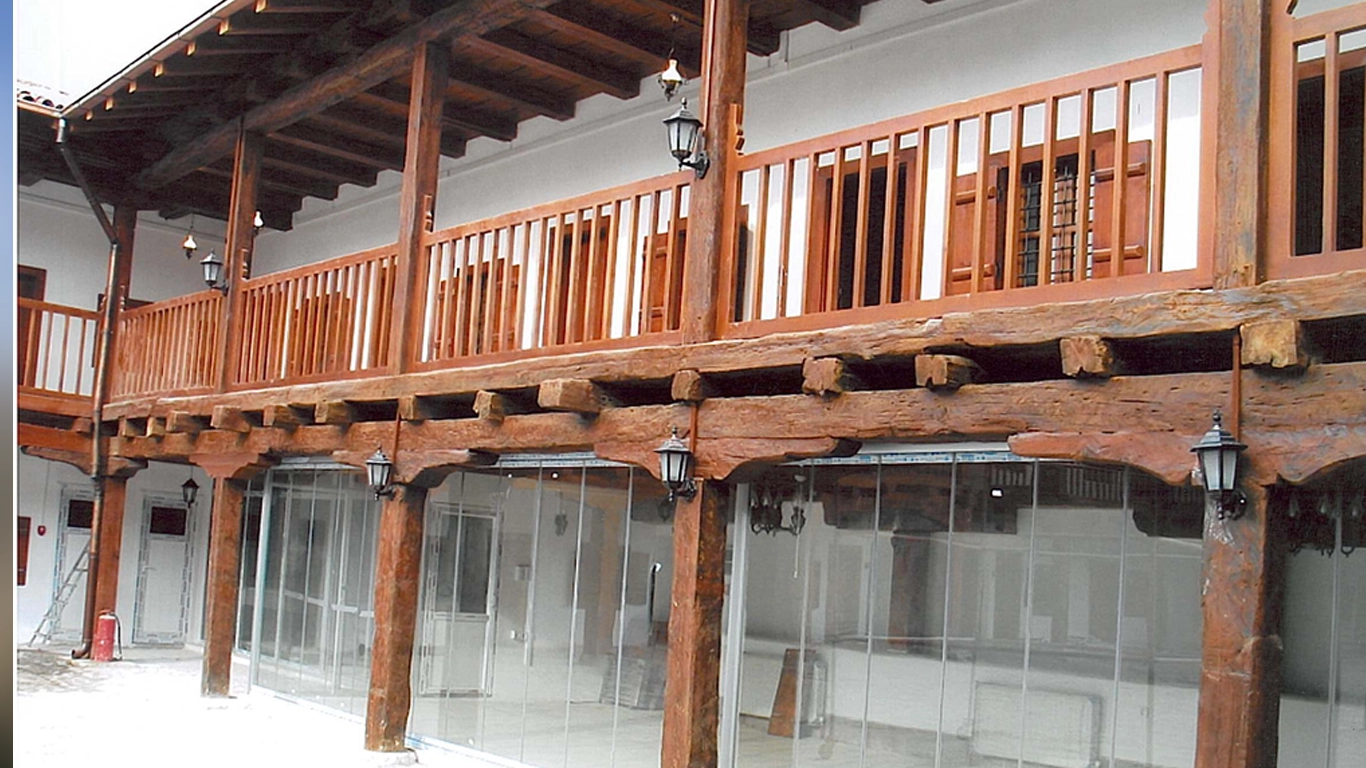
It is a square-plan inn structure; a central courtyard, surrounded by arcades and cell-like rooms. The building has three entrances, with access through the door on the west facade. The central courtyard is surrounded by arcades supported by wooden pillars on the second floor, and the cells behind them. The second floor is enclosed by simple railings. Each cell has a fireplace and a cupboard niche.
The building is constructed using stone, rubble stone, and brick, and its pitched roof is covered with traditional Turkish tiles. Taşhan is a typical example of caravanserai/inn architecture; the lower floor could be used for trade and accommodation, while the upper floor could serve as accommodation or storage.
History of Restoration and Intervention
2007 — First Major Repair
The building was restored by the General Directorate of Foundations in 2007. The cells on the upper floor were converted into hotel rooms, and the camel stable on the lower floor was converted into a restaurant.
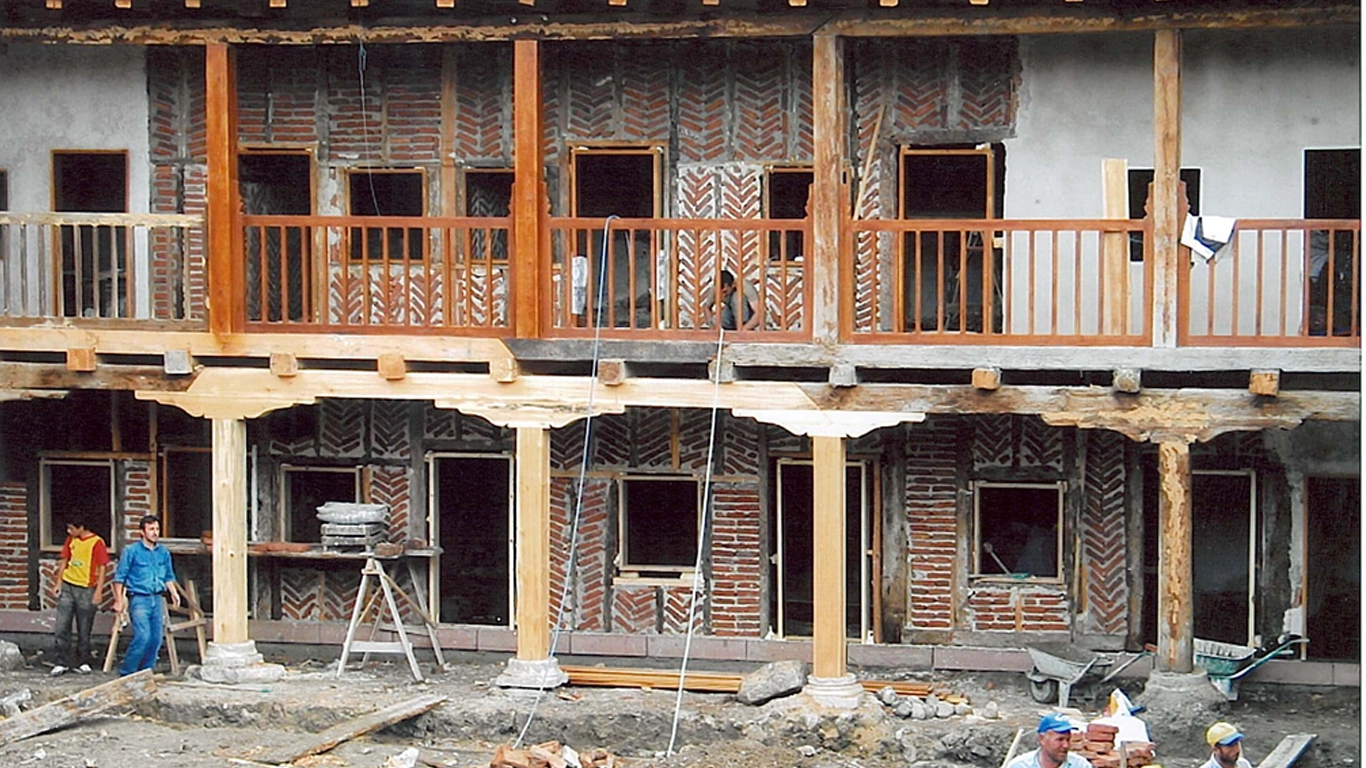
Taşhan is a slightly trapezoidal, rectangular-plan structure. It was built using an alternating technique of cut stone and brick. The north wall of the building was largely destroyed in the 1943 earthquake and was subsequently rebuilt using half-timbered beams (mud bricks filling between wooden frames) instead of stone.
During the restoration:
The shops built later adjacent to the south wall of the inn were removed, and the openings were closed;
The ruined and eroded walls and wooden beams were renewed;
A replica of the octagonal fountain, whose traces are now visible in the middle of the courtyard, was rebuilt;
The roof covering was replaced with tiles;
New firebricks were used in the wall fillings separating the cells.
This project revived the symbolic architectural elements of the inn.
2014 — Post-Fire Damage
On September 29, 2014, Taşhan suffered significant damage due to a fire. The fire was believed to have started from an electrical short circuit, and fire crews brought it under control after several hours of work.
2015–2017 — Restoration
Following the damage, restoration work was initiated once again.
In 2017, the restoration was completed, and Taşhan — a historical monument approximately 300 years old — was revived.
New Functions of Taşhan After Restoration
It was opened as a hotel and restaurant.
The upper floor houses a boutique hotel with a capacity of 35 beds,
The lower floor includes a restaurant, small shops, ablution facilities, and a children’s play area.
With this transformation, the building has been made functional, contributing to both tourism and the local economy.
Historical Significance
Taşhan is a symbol of Vezirköprü’s historical trade and lodging culture. It is believed to have been built as an inn due to its importance on Ottoman-era trade routes.
The fact that the structure has been restored twice after a long period of neglect is considered significant both in terms of preserving cultural heritage and utilizing it as an economic resource.